{ "@context": "https://schema.org", "@graph": [ { "@type": "WebPage", "@id": "https://faruqilaw.com/blog/1268/new-york-court-of-appeals-rejects-maintenance-companys-efforts-to-dismiss-prevailing-wage-claims/#webpage", "url": "https://faruqilaw.com/blog/1268/new-york-court-of-appeals-rejects-maintenance-companys-efforts-to-dismiss-prevailing-wage-claims/", "name": "New York Court of Appeals Rejects Maintenance Company\u2019s Efforts To Dismiss Prevailing Wage Claims", "datePublished": "2026-07-08T17:50:43+00:00", "dateModified": "2026-07-08T17:50:43+00:00", "isPartOf": { "@type": "WebSite", "name": "Faruqi & Faruqi, LLP", "url": "https://faruqilaw.com/" } }, { "@type": "Article", "@id": "https://faruqilaw.com/blog/1268/new-york-court-of-appeals-rejects-maintenance-companys-efforts-to-dismiss-prevailing-wage-claims/#article", "headline": "New York Court of Appeals Rejects Maintenance Company\u2019s Efforts To Dismiss Prevailing Wage Claims", "description": "On June 23, 2026, the New York Court of Appeals decided Walton v. Comfort Sys. USA (Syracuse), Inc., 2026 N.Y. Slip Op. 03911, 2026 WL 1790858 (N.Y. June\u2026", "mainEntityOfPage": { "@id": "https://faruqilaw.com/blog/1268/new-york-court-of-appeals-rejects-maintenance-companys-efforts-to-dismiss-prevailing-wage-claims/#webpage" }, "url": "https://faruqilaw.com/blog/1268/new-york-court-of-appeals-rejects-maintenance-companys-efforts-to-dismiss-prevailing-wage-claims/", "datePublished": "2026-07-08T17:50:43+00:00", "dateModified": "2026-07-08T17:50:43+00:00", "author": { "@type": "Person", "name": "Jonathan Goldhirsch" }, "publisher": { "@id": "https://faruqilaw.com/blog/1268/new-york-court-of-appeals-rejects-maintenance-companys-efforts-to-dismiss-prevailing-wage-claims/#publisher" }, "image": "https://faruqilaw.com/wp-content/uploads/2025/12/Featured_Image_12.4.2025.png" }, { "@type": "Organization", "@id": "https://faruqilaw.com/blog/1268/new-york-court-of-appeals-rejects-maintenance-companys-efforts-to-dismiss-prevailing-wage-claims/#publisher", "name": "Faruqi & Faruqi, LLP", "url": "https://faruqilaw.com/", "telephone": "+1-212-983-9330", "logo": { "@type": "ImageObject", "url": "https://faruqilaw.com/wp-content/uploads/2025/05/logo.svg" }, "address": { "@type": "PostalAddress", "streetAddress": "685 3rd Ave 26th Floor", "addressLocality": "New York", "postalCode": "10017", "addressRegion": "NY", "addressCountry": "US" }, "sameAs": [ "https://faruqilaw.com/", "https://maps.google.com/?cid=3247549158190754383" ] }, { "@type": "FAQPage", "@id": "https://faruqilaw.com/blog/1268/new-york-court-of-appeals-rejects-maintenance-companys-efforts-to-dismiss-prevailing-wage-claims/#faq", "mainEntity": [ { "@type": "Question", "name": "What did the New York Court of Appeals decide in Walton v. Comfort Systems USA?", "acceptedAnswer": { "@type": "Answer", "text": "The Court held that maintenance technicians could continue pursuing their lawsuit seeking unpaid prevailing wages from their employer under New York law." } }, { "@type": "Question", "name": "What are prevailing wages?", "acceptedAnswer": { "@type": "Answer", "text": "Prevailing wages are minimum wage rates and benefits that contractors working on public works projects are generally required to pay employees under New York Labor Law." } }, { "@type": "Question", "name": "Why did the maintenance company seek to dismiss the lawsuit?", "acceptedAnswer": { "@type": "Answer", "text": "The employer argued that its municipal contracts did not explicitly require prevailing wages and that the employees' claims were barred by a one-year contractual limitation period." } }, { "@type": "Question", "name": "Did the Court agree that prevailing wage requirements must be expressly written into every contract?", "acceptedAnswer": { "@type": "Answer", "text": "No. The Court ruled that prevailing wage requirements are implicit in every public works contract, even if the contract does not expressly include the language." } }, { "@type": "Question", "name": "Why are prevailing wages required on public works projects?", "acceptedAnswer": { "@type": "Answer", "text": "New York law requires prevailing wages to help ensure that workers on public projects receive fair compensation and that contractors do not win bids by underpaying employees." } }, { "@type": "Question", "name": "What did the Court say about contractors failing to include prevailing wage provisions in contracts?", "acceptedAnswer": { "@type": "Answer", "text": "The Court held that a contractor cannot avoid its legal obligations simply because the required prevailing wage language was omitted from the contract." } }, { "@type": "Question", "name": "What is a public works contract?", "acceptedAnswer": { "@type": "Answer", "text": "A public works contract is an agreement involving construction, maintenance, repair, or similar work performed for a government entity or public agency." } }, { "@type": "Question", "name": "Who may be entitled to prevailing wages under New York law?", "acceptedAnswer": { "@type": "Answer", "text": "Employees working on qualifying public works projects, including workers in construction, maintenance, flagging, and other covered occupations, may be entitled to prevailing wages." } }, { "@type": "Question", "name": "What constitutional significance did the Court recognize regarding prevailing wages?", "acceptedAnswer": { "@type": "Answer", "text": "The Court emphasized that the right to prevailing wages is both a statutory and constitutional protection that has existed in New York for more than a century." } }, { "@type": "Question", "name": "Can workers sue as third-party beneficiaries of public works contracts?", "acceptedAnswer": { "@type": "Answer", "text": "Yes. The Court reaffirmed that workers may bring third-party beneficiary lawsuits to enforce their right to receive prevailing wages." } }, { "@type": "Question", "name": "What is a third-party beneficiary claim?", "acceptedAnswer": { "@type": "Answer", "text": "A third-party beneficiary claim allows someone who is not a direct party to a contract, but who benefits from it, to enforce certain contractual obligations." } }, { "@type": "Question", "name": "Can contractors shorten the statute of limitations for prevailing wage claims through contract language?", "acceptedAnswer": { "@type": "Answer", "text": "No. The Court held that contractors cannot use contractual limitation periods to reduce the time workers have to bring prevailing wage claims." } }, { "@type": "Question", "name": "Why did the Court reject the one-year contractual limitation period?", "acceptedAnswer": { "@type": "Answer", "text": "The Court found that contractors should not be permitted to limit workers' statutory and constitutional rights without the workers' knowledge or agreement." } }, { "@type": "Question", "name": "Why is the Walton decision important for employees?", "acceptedAnswer": { "@type": "Answer", "text": "The decision strengthens workers' ability to enforce prevailing wage rights and prevents employers from avoiding those obligations through contract drafting." } }, { "@type": "Question", "name": "How does New York Labor Law protect prevailing wage rights?", "acceptedAnswer": { "@type": "Answer", "text": "The law requires contractors performing public works projects to promise payment of prevailing wages, regardless of whether the contract explicitly includes that requirement." } }, { "@type": "Question", "name": "What types of workers could benefit from the Walton ruling?", "acceptedAnswer": { "@type": "Answer", "text": "Construction workers, maintenance technicians, flaggers, and other employees working on covered public works projects may benefit from the Court's decision." } }, { "@type": "Question", "name": "Can employers avoid prevailing wage obligations by drafting contracts differently?", "acceptedAnswer": { "@type": "Answer", "text": "No. The Court made clear that statutory prevailing wage obligations apply regardless of how a contractor drafts its agreements." } }, { "@type": "Question", "name": "What policy goal do prevailing wage laws serve?", "acceptedAnswer": { "@type": "Answer", "text": "Prevailing wage laws help ensure fair compensation for workers while promoting fair competition among contractors bidding on public projects." } }, { "@type": "Question", "name": "What did the Court say about competitive bidding on public projects?", "acceptedAnswer": { "@type": "Answer", "text": "The Court reaffirmed that public contracts should not be awarded based on contractors reducing labor costs by underpaying employees." } }, { "@type": "Question", "name": "Why is the Walton decision significant for future prevailing wage disputes?", "acceptedAnswer": { "@type": "Answer", "text": "The ruling reinforces that prevailing wage protections are strongly supported under New York law and provides important guidance for future disputes involving public works contractors and employees." } } ] } ] }

New York Court of Appeals Rejects Maintenance Company’s Efforts To Dismiss Prevailing Wage Claims

8 Jul 2026
Last Updated: July 8, 2026

On June 23, 2026, the New York Court of Appeals decided Walton v. Comfort Sys. USA (Syracuse), Inc., 2026 N.Y. Slip Op. 03911, 2026 WL 1790858 (N.Y. June 23, 2026), holding that maintenance technicians could proceed with their suit seeking prevailing wages from their employer. The employer argued that the technicians’ suit should be dismissed, as (1) the municipal contracts they sought relief under did not contain explicit provisions requiring the payment of prevailing wages; (2) the technicians’ claims were barred by a 1-year contractual limitation period. The Court ruled against the maintenance company on both questions.

Although the maintenance company argued that their municipal contracts did not explicitly require the payment of prevailing wages, the Court disagreed stating that such a requirement is implicit in all public works contracts.

The Court emphasized that the right to prevailing wages is both a statutory and constitutional right that has been enshrined for over a century. The Court held that the New York Labor Law requires contractors to include a promise to pay prevailing wages in every public works contract. A contractor’s failure to include this payment term does not allow them to short circuit the Labor Law’s mandates. The Court held that third-party beneficiary suits are necessary to ensure that workers’ rights to prevailing wages could be vindicated in court.

Similarly, the Court ruled that a contractor cannot enforce a contractual limitation to shorten the statute of limitations for prevailing wage claims. Again, the Court acknowledged the unique constitutional right to prevailing wages, and noted that a contractor should not be permitted to limit workers’ rights without their input or agreement.

The Walton ruling is an important victory for employees working on public works project, including those working in construction, maintenance, and flagging positions, as it acknowledges their statutory and constitutional right to prevailing wages. Significantly, the Court reaffirmed that prevailing wage mandates exist to “ensure that the winning bid on a public project is not made on the backs of the contractor’s employees.” Id. at *5.

Share this post on
About Faruqi & Faruqi, LLP

Faruqi & Faruqi, LLP focuses on complex civil litigation, including securities, antitrust, wage and hour and consumer class actions as well as shareholder derivative and merger and transactional litigation. The firm is headquartered in New York, and maintains offices in Atlanta, Los Angeles and Philadelphia.

Since its founding in 1995, Faruqi & Faruqi, LLP has served as lead or co-lead counsel in numerous high-profile cases which ultimately provided significant recoveries to investors, direct purchasers, consumers and employees.

To schedule a free consultation with our attorneys and to learn more about your legal rights, call our offices today at (877) 247-4292 or (212) 983-9330.

About Jonathan Goldhirsch

Jonathan Goldhirsch is an Associate in Faruqi & Faruqi’s New York office.  Jonathan’s practice is focused on employment litigation.
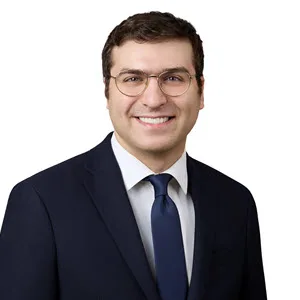
Jonathan Goldhirsch
Associate at Faruqi & Faruqi, LLP
New York office
Tel:(212) 983-9330
Fax:(212) 983-9331
E-mail:jgoldhirsch@faruqilaw.com
Tags: construction law, court of appeals, employment law, labor law, New York, prevailing wage, public works, statute of limitations, third party beneficiary, workers' rights

Our Offices

Our offices are nationwide. If you have any questions about a case or our firm, please contact us.
Send Us a Message
New York
685 Third Avenue 26th Floor
New York New York 10017
(877) 247-4292 / (212) 983-9330
(212) 983-9331
Los Angeles
1901 Avenue of the Stars Suite 1060
Los Angeles California 90067
(424) 256-2884
(424) 256-2885
Atlanta
3565 Piedmont Road NE Building Four, Suite 380
Atlanta Georgia 30305
(404) 847-0617
(404) 506-9534
Philadelphia
1617 JFK Boulevard, Suite 1550 Philadelphia
Pennsylvania 19103
(215) 277-5770
(215) 277-5771